
Yellow cards and suspensions can change a FIFA World Cup campaign. A caution usually allows a player to continue in the current match, but it may count towards a suspension in a later fixture.
A red card has a more immediate impact: the player is sent off, leaving the team with one fewer player. A subsequent match suspension may also apply under the competition’s disciplinary rules.
However, not every yellow card automatically means a player will miss the next game. The accumulation threshold, reset points and suspension rules depend on the tournament regulations.
This guide explains how World Cup yellow cards work, what happens after a red card and the special card-reset arrangements for the 2026 men’s FIFA World Cup.
What Do Yellow Cards and Red Cards Mean?
What Is a Yellow Card?
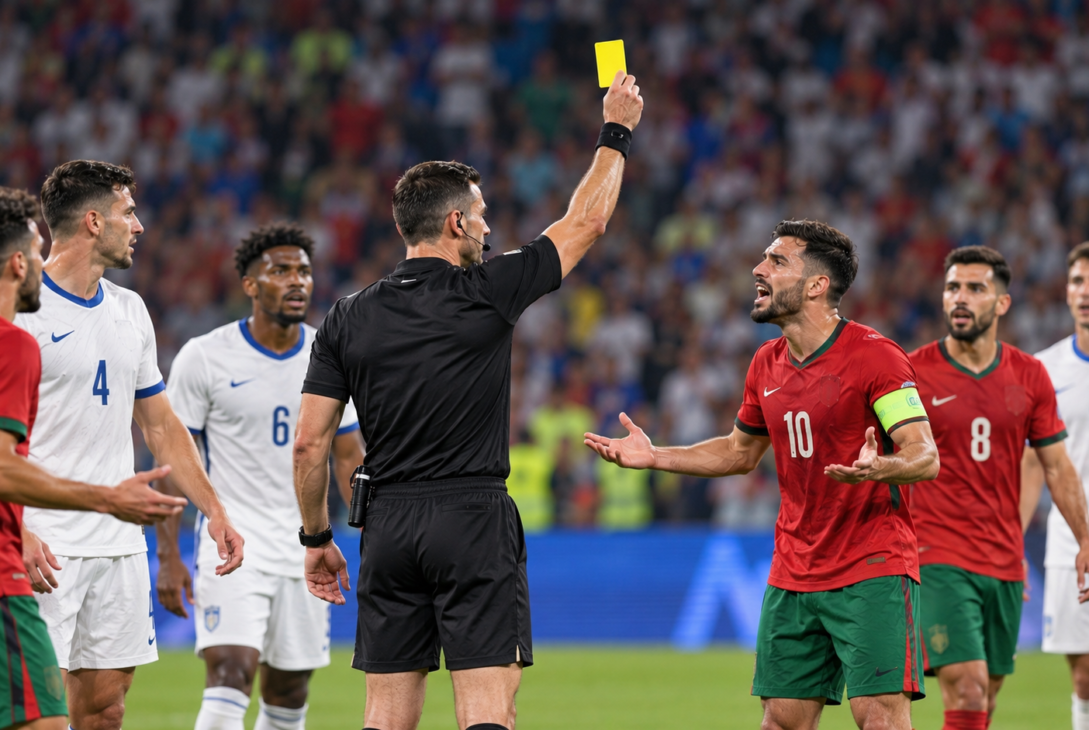
A yellow card is a formal caution issued by the referee for an offence under the Laws of the Game.
Common reasons include unsporting behaviour, dissent, persistently breaking the rules, delaying a restart or failing to respect the required distance at a set piece.
A player who receives one yellow card normally stays on the pitch. However, the caution is recorded and may affect the player’s availability for a future match under the tournament’s disciplinary rules.
If a player receives a second yellow card in the same match, the referee shows a red card and sends the player off.
What Is a Red Card?
A red card means the player is dismissed from the match. It may be shown directly for a serious offence or after a player receives a second yellow card in the same game.
A direct red card can result from offences such as serious foul play, violent conduct or denying an obvious goal-scoring opportunity in circumstances covered by the Laws of the Game.
After a sending-off, the team must continue with one fewer player. The player may also be suspended for a subsequent match, depending on the competition’s disciplinary regulations.
A red-card suspension and a suspension caused by accumulating yellow cards are different situations. It is important not to treat them as the same rule.
How Does World Cup Yellow-Card Accumulation Work?
Many football tournaments use a yellow-card accumulation threshold. If a player receives enough cautions across separate matches, the player may be suspended for a later fixture.
The exact threshold and the point at which cards are reset are determined by the regulations for the specific competition. Fans should not assume that every World Cup edition uses identical rules.
For example, a player who receives a yellow card in one group match may still be available for the next match. Whether another caution results in a suspension depends on the player’s existing disciplinary record and the tournament rules.
This can influence a coach’s decisions. A key defender who is close to a suspension may need to be managed carefully, particularly before a knockout match.
However, coaches must balance this risk against the need to compete. Players cannot avoid every challenge simply because another yellow card might have consequences.
The 2026 World Cup Yellow-Card Reset Rules
FIFA’s regulations for the 2026 men’s World Cup provide that single yellow cards in the final competition are cancelled after the group stage and again after the quarter-finals.
The reset is intended to reduce the chance that players miss the semi-finals or final because of cautions accumulated earlier in the tournament.
There are two important points to understand:
- A single yellow card being cancelled does not mean that an already imposed suspension disappears.
- Red-card sanctions can have separate consequences under the applicable disciplinary regulations.
FIFA also amended the rules for certain suspensions from the preliminary competition. Single yellow cards and specified pending one- or two-match suspensions arising from cautions in different preliminary matches, an indirect red card, or certain direct red cards are not carried into the final competition. Other pending match suspensions resulting from red cards in preliminary matches are carried over.
Because these provisions are technical and tournament-specific, consult the official FIFA regulations before claiming that a particular player is suspended or that every card has been reset.
How Suspensions Affect World Cup Teams
Suspensions can change a team’s tactics and starting lineup.
A suspended central defender may force a coach to change the defensive partnership. If a defensive midfielder is unavailable, the team may find it harder to protect the area in front of its defence. Losing an attacking player can reduce pressing, creativity or counterattacking options.
Coaches therefore need to track the disciplinary position of their players throughout the tournament.
A player who is one caution away from a ban may need to avoid unnecessary dissent, delaying restarts or reckless challenges. However, the team still needs to defend and compete effectively.
For fans, the important distinction is between a player who has received a yellow card and a player who has actually reached the suspension threshold. Those are not necessarily the same thing.
How to Check Whether a Player Is Suspended
Before publishing a World Cup suspension update, follow these steps:
- Check the official FIFA regulations for the tournament.
- Confirm the player’s yellow-card and red-card history.
- Check whether a card reset applies at that stage of the competition.
- Confirm whether a suspension has already been imposed and whether it has been served.
- Check official match reports or team announcements for the player’s availability.
Be careful with claims that a player “will miss the next game” immediately after receiving a yellow card. That statement may be incorrect if the player has not reached the accumulation threshold or if a reset applies.
Reliable football reporting should explain both the rule and the player’s actual disciplinary position.
Conclusion
World Cup yellow cards and suspensions are an important part of football strategy. Yellow-card accumulation, second-yellow dismissals and direct red cards are different situations, and each is governed by the applicable tournament regulations.
For the 2026 men’s World Cup, FIFA states that single yellow cards in the final competition are cancelled after the group stage and again after the quarter-finals. However, a card reset does not automatically cancel an existing suspension.
Always check the official regulations before stating that a player will miss a match. Accurate disciplinary information helps football fans understand team selection and prevents outdated rules from spreading online.