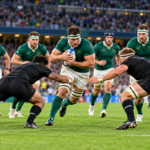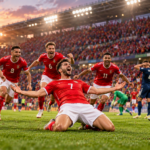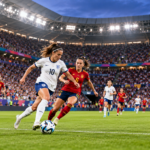

The greatest World Cup comebacks show why a football match is never settled until the final whistle. A team can trail by two or three goals and still find a way back through tactical changes, brave attacking and precise finishing.
Other comebacks are decided by one late goal after a team has spent most of the match chasing an equaliser. At the FIFA World Cup, these moments become even more dramatic because a single match can determine whether a team advances or goes home.
From Belgium’s dramatic victory against Japan in 2018 to Portugal’s recovery against North Korea in 1966, World Cup history is full of extraordinary turnarounds.
What Makes a World Cup Comeback Special?
A comeback happens when a team recovers from a losing position to draw or win. Some involve a large deficit, while others depend on a late equaliser or winner.
It is important to distinguish a comeback win from a dramatic draw. Both can be memorable, but the final outcomes are different. A match can also go to extra time or a penalty shootout, so the stage at which the result was decided matters.
Successful comebacks often involve a combination of factors. Coaches introduce fresh players or change the formation, the team in front begins to defend deeper, and the team behind takes more attacking risks. Set pieces can create additional chances, while one player may produce a decisive moment under pressure.
These elements help explain how a match can change direction in only a few minutes.
Famous World Cup Comebacks
Belgium 3–2 Japan — 2018
Belgium and Japan met in the Round of 16 at the 2018 World Cup in Russia. Japan took a 2–0 lead early in the second half, with goals from Genki Haraguchi and Takashi Inui.
Belgium faced the prospect of elimination. The team responded through Jan Vertonghen, who scored with a looping header, before Marouane Fellaini equalised with a powerful header from a cross.
The match was level, but Japan still had a chance to take the game into extra time. Instead, Belgium launched a rapid counterattack after a Japanese corner. Kevin De Bruyne helped drive the move forward, Thomas Meunier delivered the ball and Nacer Chadli scored the winner in stoppage time.
Belgium won 3–2 and advanced to the quarter-finals. The ending became one of the most dramatic moments of the 2018 tournament.
The match illustrates why attacking a corner late in a game can be risky. Japan were searching for a winner, but losing possession allowed Belgium to attack the space left behind.
Portugal 5–3 North Korea — 1966
Portugal produced one of the most remarkable comebacks in men’s World Cup history during the 1966 quarter-finals.
North Korea took a surprising 3–0 lead, putting Portugal under enormous pressure. Portugal responded through Eusébio, who scored four goals. José Augusto added another as Portugal recovered to win 5–3.
The result was a major moment in Eusébio’s international career and helped Portugal reach the semi-finals.
North Korea had already shocked Italy earlier in the tournament, so the quarter-final looked like another opportunity for the team to make history. Portugal’s response changed the story completely.
This match remains a useful example of how quickly momentum can change when an attacking team finds space and begins converting its chances.
Netherlands 2–1 Mexico — 2014
Mexico appeared close to reaching the quarter-finals after taking the lead against the Netherlands in their Round of 16 match at Brazil 2014.
Giovani dos Santos scored for Mexico, and the team worked to protect its advantage. The Netherlands continued attacking, however, and Wesley Sneijder equalised late in the match.
Klaas-Jan Huntelaar then converted a stoppage-time penalty to give the Netherlands a 2–1 victory.
The penalty decision was controversial, and the match remains debated by some supporters. Nevertheless, it is a clear example of a late turnaround in a knockout game, where one moment can decide a team’s entire tournament.
Brazil 4–2 Sweden — 1938
Brazil came from two goals behind to defeat Sweden 4–2 in the third-place match at the 1938 World Cup in France.
Although this match is less widely discussed than some modern comebacks, it forms part of the tournament’s long history of dramatic reversals. Brazil’s attacking response helped the team secure third place.
Historical examples are valuable because they show that comebacks were a feature of the World Cup long before modern substitutions, sports science and detailed video analysis.
How Do Teams Turn a Match Around?
Teams chasing a result often increase their attacking numbers, move the ball forward faster and use substitutions to introduce pace or aerial strength.
However, attacking more aggressively can leave space for counterattacks. Coaches must decide how much defensive protection to keep while searching for goals.
Set pieces become particularly important when time is running out. One free kick or corner can create a clear scoring opportunity without requiring a long attacking move.
The team protecting a lead also has a role in the outcome. If it retreats too deeply, loses possession repeatedly or stops threatening on the counterattack, it can invite pressure.
A comeback is rarely just about emotion. It often combines tactical choices, fitness, individual skill and the ability to make good decisions under pressure.
Conclusion
The greatest World Cup comebacks are memorable because they combine pressure with a dramatic change in the match’s direction. Belgium’s late win over Japan, Portugal’s recovery against North Korea and the Netherlands’ victory over Mexico each unfolded differently.
Together, they show that a lead is only secure when it is managed well until the final whistle. For football fans, the best comeback stories are not just about emotion; they also reveal how tactics, substitutions and decision-making shape football history.