

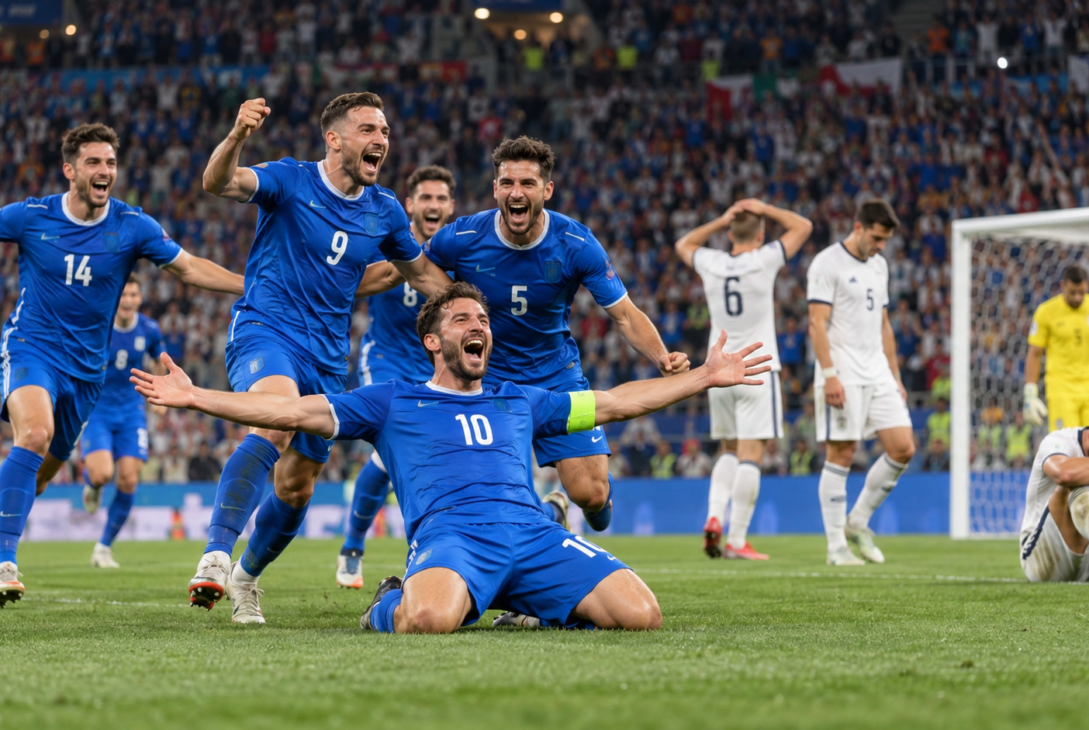
The biggest World Cup upsets are memorable because they overturn expectations on football’s largest stage. A team with fewer famous players or a less impressive tournament history can defeat a title contender through organisation, courage and clinical finishing.
These matches do more than produce surprising scorelines. They can change a group, send a champion home or inspire a country for years. From Saudi Arabia’s victory over Argentina in 2022 to South Korea’s win against Germany in 2018, the FIFA World Cup has delivered results that football fans never forget.
But what makes these matches so surprising, and how do underdogs defeat stronger opponents?
What Makes a World Cup Upset?
There is no single official definition of a World Cup upset. Generally, the term describes a result in which a team expected to lose defeats a stronger or more celebrated opponent.
Rankings, previous titles, squad quality and pre-match expectations all influence how surprising a result appears. A victory against a defending champion may attract more attention than a win against a team with less tournament history.
Football’s low-scoring nature also makes unexpected results possible. One goal, a set piece, a defensive mistake or an outstanding goalkeeper performance can outweigh a major difference in reputation.
Underdogs often approach these matches with a clear strategy. They defend compactly, protect dangerous areas, limit space between their players and attack quickly when an opportunity appears. Meanwhile, favourites can struggle if they become impatient or concede first.
Famous World Cup Upsets That Changed Football History
Saudi Arabia 2–1 Argentina — 2022
Argentina arrived at the 2022 FIFA World Cup in Qatar as one of the favourites. The team had gone 36 international matches unbeaten, and expectations were high around Lionel Messi and his teammates.
Messi scored a first-half penalty, but Argentina had several other efforts ruled out for offside. Saudi Arabia responded after the break. Saleh Al Shehri equalised before Salem Al Dawsari scored a superb winner to complete a remarkable 2–1 victory.
The result became one of the defining shocks of Qatar 2022. Saudi Arabia’s defensive organisation and decisive attacking moments caused major problems for Argentina.
The defeat did not end Argentina’s campaign. The team recovered, reached the final and won the World Cup. That makes the opening result even more striking: even the eventual champions can suffer a shocking defeat.
South Korea 2–0 Germany — 2018
Germany entered the 2018 World Cup in Russia as defending champions. However, a defeat against Mexico in their opening match put their campaign under pressure.
Germany needed a victory against South Korea to keep their qualification hopes alive. The match remained goalless until stoppage time, when Kim Young-gwon scored after a VAR review. Son Heung-min then added a second goal as Germany pushed forward.
Germany were eliminated in the group stage for the first time in the men’s tournament since 1938. South Korea also failed to advance, but the result became one of the most memorable shocks of the competition.
It demonstrated that a disciplined team can defeat a famous opponent by staying organised and taking its chances when they arrive.
Cameroon 1–0 Argentina — 1990
Defending champions Argentina began the 1990 World Cup against Cameroon. Despite the difference in reputation, Cameroon won 1–0 in a match that became one of the tournament’s famous opening-day surprises.
Cameroon had two players sent off during the game but still held on to their lead. The team later reached the quarter-finals, becoming one of the major stories of the tournament.
The result challenged assumptions about African national teams and showed how teamwork and determination can compete with individual star power.
Senegal 1–0 France — 2002
France began the 2002 World Cup as defending champions and European champions. Senegal, making its first appearance at the men’s World Cup, faced a difficult opening match.
Senegal won 1–0 through a goal from Papa Bouba Diop. France went on to exit the group stage without scoring a goal.
The result became a defining moment for Senegalese football and one of the tournament’s most famous surprises. It also showed that past titles do not guarantee success in a new competition.
Why Do World Cup Underdogs Win?
Several factors can contribute to a major football upset.
Tactical discipline: A compact defensive shape can make it difficult for favourites to create clear chances.
Counterattacks: Teams pushing forward can leave space that underdogs exploit.
Set pieces: Free kicks and corners provide opportunities even when a team has limited possession.
Goalkeeping: Important saves can keep an underdog in the game.
Pressure: Favourites may rush their decisions if they fall behind or struggle to score.
Taking chances: Underdogs sometimes need only a small number of opportunities to change a match.
Upsets should not automatically be dismissed as luck. Preparation, concentration and execution are often central to the result.
Conclusion
The biggest World Cup upsets are part of what makes international football so compelling. Saudi Arabia’s win over Argentina, South Korea’s victory against Germany, Cameroon’s defeat of Argentina and Senegal’s win over France all challenged pre-match expectations.
Each result had its own tactical and historical context, but the lesson is shared: a favourite still has to perform on the pitch. The best way to understand a famous upset is to look beyond the final score and ask how the underdog created its opportunities—and what the result changed.