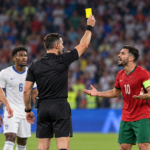

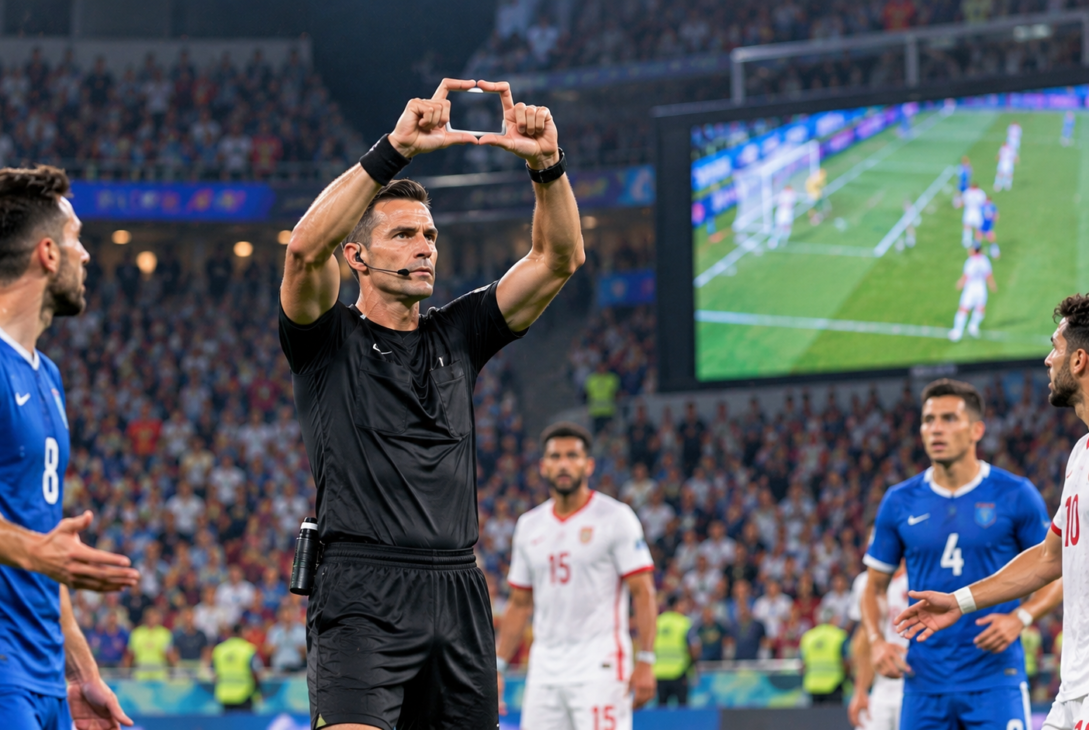
Video Assistant Referee, usually called VAR, helps match officials review certain important incidents in football. At the FIFA World Cup, the system is designed to correct clear and obvious errors or serious missed incidents in specific situations.
VAR does not replace the referee, and it is not intended to review every foul, throw-in or disputed challenge. The on-field referee remains responsible for the final decision.
Understanding the rules can help fans follow controversial moments, know why a review is taking place and understand why some decisions change while others remain the same.
What Does VAR Mean in Football?
VAR stands for Video Assistant Referee. It is a match official who has access to video footage and can assist the referee when the rules allow it.
The referee must make an initial decision, including allowing play to continue if no offence is seen. VAR can then check the incident and communicate information to the referee.
The established VAR protocol focuses on four main categories:
- Goal or no goal.
- Penalty or no penalty.
- Direct red-card incidents.
- Mistaken identity when the referee cautions or sends off the wrong player.
The main principle is that an original decision should not be changed unless the review meets the applicable intervention threshold. The referee makes the final decision.
Which Decisions Can VAR Review?
Goal or No Goal
VAR can check whether a goal should stand. This may include reviewing an offside decision, a foul or handball by the attacking team, or whether the ball went out of play before the goal.
These checks are important because an error in the attacking phase can directly affect the score.
Penalty or No Penalty
VAR can help determine whether a penalty was correctly awarded or whether a clear penalty offence was missed.
Officials may examine whether contact occurred, where an offence happened and whether the ball was out of play before the incident. The interpretation of contact or handball can still involve judgement.
Direct Red Cards
VAR can assist with serious incidents that may justify a direct red card, such as serious foul play, violent conduct or denying an obvious goal-scoring opportunity.
The 2026/27 protocol developments also allow review of a red card resulting from a clearly incorrect second yellow card. This is an important update because older explainers may describe the previous protocol.
Mistaken Identity
If the referee penalises a player but shows the yellow or red card to the wrong player from the offending team, VAR can help identify the correct player.
This review concerns the identity of the player receiving the card rather than automatically reopening every part of the original incident.
How Does a VAR Review Work?
VAR automatically checks potential reviewable situations, so players and coaches do not need to request a check.
If there is no clear and obvious error or serious missed incident, the original decision normally stands. If the VAR identifies a possible error, the referee can be advised to review the incident.
There are two main ways a review can be resolved.
VAR-only review: Some factual decisions, such as an offside position or the location of an offence, can be resolved using video information without the referee viewing the monitor.
On-field review: For decisions involving subjective judgement, the referee may go to the pitchside monitor to review the footage before deciding whether to change the original call.
The referee then communicates the final decision and restarts play according to the Laws of the Game. There is no fixed maximum review time in the established protocol because accuracy takes priority over speed.
What Changed for VAR in 2026?
The IFAB approved changes to the VAR protocol for the 2026/27 Laws of the Game, with implementation provisions for competitions that began earlier.
The changes allow VAR to check and review certain additional situations, including:
- Red cards resulting from a clearly incorrect second yellow card.
- Mistaken identity when the wrong player is shown a yellow or red card.
- A clearly incorrect corner-kick award, where the competition permits it and the review can be completed immediately without delaying the restart.
The IFAB also approved a specific clarification for the 2026 World Cup concerning certain clear attacking-team offences before the ball is put into play at a corner or free kick, where the offence directly affects a goal, penalty or disciplinary sanction.
These developments matter because older online guides may describe the previous protocol. When publishing an article about VAR rules, always make clear which edition of the Laws of the Game applies.
Why Does VAR Still Cause Debate?
VAR can correct important mistakes, but it cannot remove every disagreement from football.
Some decisions are factual, while others depend on interpretation. Technology may show where contact happened, for example, but deciding whether a challenge was careless, reckless or serious foul play can still require judgement.
VAR can also interrupt celebrations and create delays while supporters wait for a decision. Camera angles and the speed of an incident may affect how an event is interpreted.
The best way to understand VAR is to ask three questions:
- Is the incident within a reviewable category?
- Does it meet the relevant threshold for intervention?
- Who is responsible for the final decision?
The answer to the last question remains the referee.
Conclusion
VAR helps football officials review specific match-changing incidents, but it does not replace the referee or review every disputed decision. The established categories cover goals, penalties, direct red cards and mistaken identity, with additional provisions introduced for 2026/27.
Because the rules can change, the most reliable way to explain VAR is to consult the current IFAB protocol and distinguish factual checks from decisions that require the referee’s judgement.