

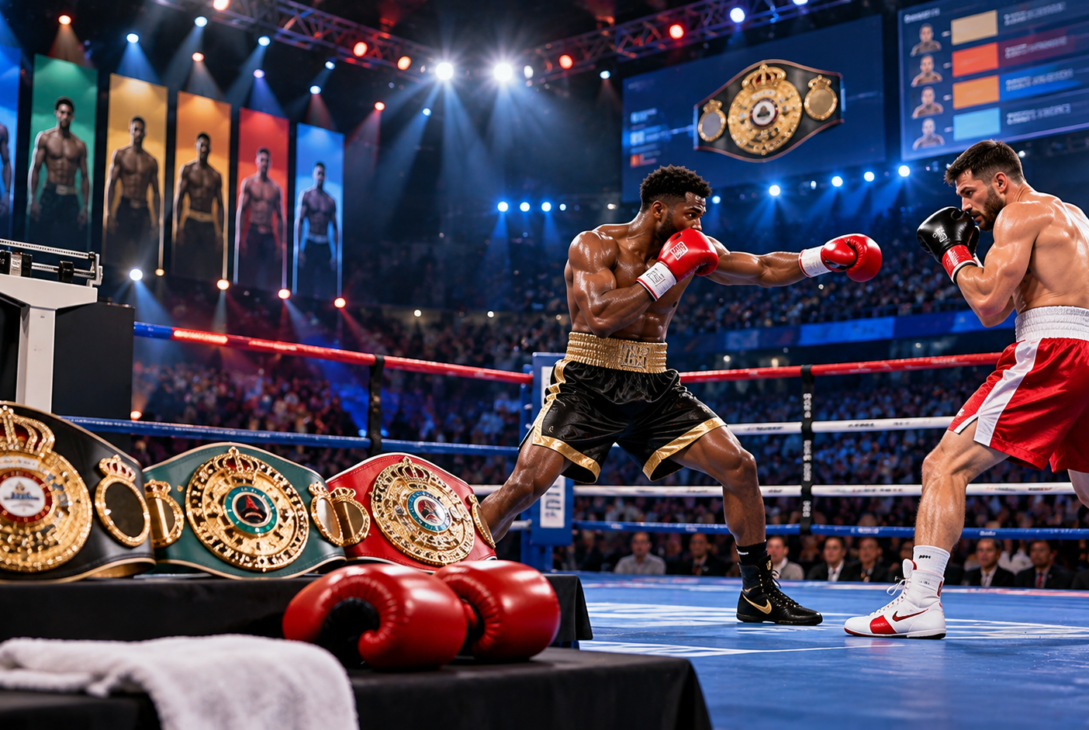
Boxing is divided into weight classes so fighters compete against opponents of similar size and weight. This system improves fairness and safety because a smaller fighter should not regularly face someone who is much heavier.
Each weight class has an official maximum weight. Fighters must weigh within the limit before the bout. Professional boxing also uses specific rules for rounds, scoring, knockdowns, fouls, and championship titles.
This guide explains the main boxing weight classes, professional boxing rules, scoring system, weigh-ins, and the major championship belts.
Why does boxing use weight classes?
A fighter’s size can affect strength, punching power, reach, speed, and resistance to punches. Weight classes reduce the physical gap between opponents.
A boxer who weighs 140 pounds usually competes in a different division from a boxer who weighs 175 pounds. Both may be highly skilled, but the heavier fighter may have significant advantages in power and physical strength.
Weight classes allow boxers to build careers against opponents with comparable body sizes.
Main professional boxing weight classes
Professional boxing has several divisions. The names and limits can vary slightly between organizations, but the commonly recognized divisions include:
| Division | Maximum weight |
|---|---|
| Minimumweight | 105 pounds |
| Light flyweight | 108 pounds |
| Flyweight | 112 pounds |
| Super flyweight | 115 pounds |
| Bantamweight | 118 pounds |
| Super bantamweight | 122 pounds |
| Featherweight | 126 pounds |
| Super featherweight | 130 pounds |
| Lightweight | 135 pounds |
| Super lightweight | 140 pounds |
| Welterweight | 147 pounds |
| Super welterweight | 154 pounds |
| Middleweight | 160 pounds |
| Super middleweight | 168 pounds |
| Light heavyweight | 175 pounds |
| Cruiserweight | 200 pounds |
| Heavyweight | Over 200 pounds |
Some organizations also use the term junior instead of super. For example, super lightweight may also be called junior welterweight, while super featherweight may be called junior lightweight.
The Association of Boxing Commissions lists these divisions as part of its professional boxing guidelines.
What happens at the weigh-in?
A weigh-in normally takes place before the fight, often within 24 hours of the scheduled event.
Both boxers step on an approved scale under the supervision of the relevant boxing commission. They must meet the weight stated in the fight contract.
If a boxer misses weight, several things may happen:
- The fight may be cancelled.
- The bout may continue at a catchweight.
- The overweight boxer may lose eligibility to win a title.
- The boxer may pay a financial penalty.
- The opponent may receive a larger share of the purse.
The exact result depends on the contract, boxing commission, and sanctioning organization.
Weighing in is only one part of making weight. Many boxers reduce their body weight before the official weigh-in and then rehydrate before the fight. This is why a boxer’s fight-night weight may be higher than the official division limit.
How long is a professional boxing fight?
Most professional boxing rounds last three minutes, with a one-minute rest period between rounds.
A non-title fight may be scheduled for four, six, eight, or 10 rounds. Major world-title fights are commonly scheduled for 12 rounds.
Under the Association of Boxing Commissions guidelines, male professional bouts may be scheduled for a maximum of 12 rounds. The guidelines also provide different round rules for women’s professional boxing, including two-minute rounds and a maximum of 10 rounds.
Amateur boxing uses different competition rules and often has shorter rounds.
How does boxing scoring work?
Professional boxing normally uses the 10-Point Must System.
Three judges score each round. The winner of a round usually receives 10 points, while the other boxer receives nine points. The final score may be adjusted for knockdowns or referee-ordered deductions.
Common round scores include:
- 10–9: Close or normal round win.
- 10–8: Round with a knockdown or significant dominance.
- 10–7: Extremely one-sided round.
- 10–10: Even round, although this is less common.
At the end of the fight, the judges add their scores.
A boxer wins by:
- Unanimous decision: All three judges select the same boxer.
- Split decision: Two judges select one boxer and one judge selects the opponent.
- Majority decision: Two judges select one boxer and one judge score the fight as a draw.
- Draw: The judges’ scores do not produce a clear winner.
What is a knockout and technical knockout?
A knockout, or KO, occurs when a boxer is knocked unconscious or cannot beat the referee’s count before the fight resumes.
A technical knockout, or TKO, happens when the referee, doctor, or boxer’s corner stops the fight because continuing would be unsafe.
A fight may also end when a boxer is unable to defend themselves properly, suffers a serious injury, or takes too much punishment.
Knockdown rules in boxing
A knockdown occurs when a boxer touches the canvas with a body part other than the feet because of a legal punch. A boxer hanging on the ropes may also be considered knocked down if the referee believes they are being held up.
The referee begins a count after a knockdown. Under the Unified Rules of Boxing, a mandatory eight-count is used before the fight can continue.
The referee decides whether the boxer is fit to continue. The opponent cannot attack until the referee signals that the action may resume.
The Unified Rules do not include an automatic three-knockdown rule or a standing eight-count. However, local commissions or individual competitions may have additional regulations.
What punches are legal?
Boxers normally score with clean punches that land on the legal target area of the opponent.
Legal punches generally land on the front or side of the head and the body above the belt.
Common boxing fouls include:
- Hitting below the belt
- Hitting the back of the head
- Hitting the kidneys
- Headbutting
- Holding or wrestling
- Hitting an opponent who is down
- Hitting after the bell
- Using the elbow
- Biting
- Spitting
- Holding the ropes
- Hitting while an opponent is helpless
The referee can issue warnings, deduct points, or disqualify a boxer for serious or repeated fouls.
What are the four major boxing belts?
Professional boxing is governed by several sanctioning organizations. The four widely recognized major organizations are:
- WBA: World Boxing Association
- WBC: World Boxing Council
- IBF: International Boxing Federation
- WBO: World Boxing Organization
Each organization has its own rankings, rules, mandatory challengers, and world champions.
This is why boxing can have more than one world champion in the same weight division. A boxer may hold the WBC title but not the WBA, IBF, or WBO title.
The WBA rules state that the organization recognizes world championships in each weight division and that a sanctioned title can be won through an authorized championship match.
What is a unified champion?
A unified champion holds more than one major world title in the same weight division.
For example, a boxer holding the WBC and IBF belts is a unified champion.
A unification fight takes place when two champions fight to combine their titles. The winner usually leaves the ring with both championship belts, although the result may depend on individual sanctioning rules.
What is an undisputed champion?
An undisputed champion is a boxer who holds all four major world titles in the same division:
- WBA
- WBC
- IBF
- WBO
Becoming undisputed is one of the most difficult achievements in professional boxing because the champion must defeat or negotiate fights with the titleholders from multiple organizations.
Final thoughts
Boxing weight classes help create fairer and safer competition. Fighters move between divisions when their bodies, careers, or championship goals change.
The main divisions range from minimumweight to heavyweight. Boxers must meet the weight limit, follow the rules, and compete under the supervision of a boxing commission.
A fight can end by knockout, technical knockout, decision, draw, disqualification, or stoppage. If a championship is involved, the result may also affect one or more major belts.
Understanding weight divisions, scoring, knockdowns, and championship organizations makes professional boxing much easier to follow.