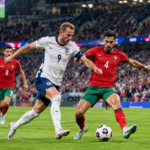
The Club World Cup brings together football clubs from different continents to compete for international recognition and the tournament title. It also offers clubs an opportunity to earn substantial financial rewards.
Prize money is an important part of modern football. Clubs need money to pay players, employ coaches, maintain facilities, develop young talent and compete in domestic and international competitions.
The amount a club earns from the Club World Cup depends on several factors. These include its participation payment, results in the group stage and progress through the knockout rounds.
The expanded 2025 FIFA Club World Cup introduced a particularly large financial reward. FIFA announced a total prize fund of $1 billion for the 32 participating clubs, with the winning club potentially earning up to $125 million.
So, how does Club World Cup prize money work, and why is it important for football clubs? Let’s explore the details.
How Much Is the Club World Cup Prize Money?
The 2025 FIFA Club World Cup featured 32 teams and was held in the United States. It introduced an expanded competition format and a significantly larger prize fund than previous editions.
FIFA divided the announced $1 billion prize fund into two main categories.
| Prize Money Category | Amount |
| Participation payments | $525 million |
| Performance-based payments | $475 million |
| Total prize fund | $1 billion |
Participation payments provide clubs with money for entering the tournament. Performance-based payments reward teams according to their match results and progress through the competition.
This structure means clubs can earn money simply by participating, while successful teams have the opportunity to receive additional payments.
The amounts above relate specifically to the 2025 edition. Future tournaments may have different prize money arrangements.
How Do Club World Cup Prize Money Payments Work?
Club World Cup prize money is not based only on which team wins the final. Participating clubs can earn money through different stages of the competition.
1. Participation Payments
Each club receives a participation payment. For the 2025 tournament, the amount depended partly on the club’s continental confederation.
European clubs received participation payments ranging from $12.81 million to $38.19 million, based on sporting and commercial criteria. Clubs from South America received $15.21 million, while participating clubs from Asia, Africa and the North, Central America and Caribbean region received $9.55 million each. Oceania’s participating club received $3.58 million.
These differences mean that clubs did not all begin the tournament with the same participation payment.
2. Group-Stage Bonuses
The group stage gives teams an opportunity to increase their earnings through match results.
Under the 2025 prize structure, each club earned:
- $2 million for a group-stage win.
- $1 million for a group-stage draw.
Each team played three group-stage matches. Winning matches therefore offered a significant financial incentive, in addition to improving the chance of reaching the knockout rounds.
3. Knockout-Stage Payments
Teams that advance beyond the group stage receive additional performance-based payments.
For the 2025 edition, the announced additional payments included:
| Tournament Achievement | Additional Payment |
| Reaching the round of 16 | $7.5 million |
| Reaching the quarter-finals | $13.125 million |
| Reaching the semi-finals | $21 million |
| Reaching the final | $30 million |
| Winning the tournament | $40 million |
These amounts are additional stage payments, not the complete amount a club earns throughout the tournament. Participation payments and earlier match bonuses must also be considered when calculating total earnings.
The structure rewards teams for progressing further, making every knockout match financially important.
How Much Can the Club World Cup Winners Earn?
The winner of the 2025 FIFA Club World Cup was eligible to earn up to $125 million in total prize money.
This figure included the club’s participation payment, performance bonuses and rewards for progressing through the tournament. The exact total depended on the applicable participation payment and match results.
Chelsea won the 2025 final, defeating Paris Saint-Germain 3–0. Their success brought the club the tournament title and the additional financial rewards associated with winning the competition.
However, the maximum announced prize amount should not be confused with the winner’s final guaranteed earnings in every edition. Prize money structures can change, and the total depends on the rules established for each tournament.
For clubs, the financial benefits can extend beyond the prize money itself. Strong performances may also increase international visibility, attract commercial interest and provide opportunities to strengthen relationships with supporters around the world.
These additional commercial benefits are not guaranteed, and they should be considered separately from official tournament payments.
Why Is Club World Cup Prize Money Important?
Prize money can influence how clubs plan their budgets and manage their sporting ambitions.
Supporting Club Finances
Football clubs face substantial operating costs, including player wages, coaching staff, travel, medical support and stadium operations. Additional tournament income can help cover some of these expenses.
Investing in Players
Clubs may use additional revenue to support player recruitment, renew contracts or improve their youth development systems. However, how the money is spent depends on each club’s financial position and strategy.
Encouraging Competitive Performance
Performance-based payments create a financial incentive to win matches and progress through the competition. Clubs that reach the later rounds can earn considerably more than those eliminated earlier.
Increasing Global Recognition
The Club World Cup provides clubs with international exposure. Playing against opponents from different footballing regions can help teams reach new audiences and increase their visibility.
Commercial partnerships and sponsorship opportunities may follow, although these depend on the club’s popularity, performance and business relationships.
Does Every Club Earn the Same Amount?
No. Participation payments vary, and performance-based earnings depend on match results and tournament progress.
A club that receives a larger participation payment may begin the competition with a financial advantage. Another club may earn additional money by winning more matches or advancing further into the knockout rounds.
For example, two teams could both reach the round of 16 but finish with different total earnings because their initial participation payments and group-stage results were different.
This is why comparing only the final prize for the winner does not provide a complete picture of Club World Cup finances.
When comparing earnings, it is important to distinguish between participation payments, performance bonuses, total tournament prize money and any separate commercial revenue.
Conclusion
The Club World Cup offers football clubs both a chance to compete for an international title and an opportunity to earn significant financial rewards.
The 2025 FIFA Club World Cup introduced a $1 billion prize fund for 32 participating clubs. FIFA’s announced structure included $525 million in participation payments and $475 million in performance-based payments, with the winning club eligible to earn up to $125 million.
Actual earnings depend on participation payments, match results and progress through the competition. This makes the tournament financially important for clubs across different continents.
As the competition develops, prize money will remain an important subject for football supporters who want to understand how international tournaments affect clubs both on and off the pitch.